Showing posts with label Rodney King. Show all posts

Saturday, July 13, 2013

Rapper Says Racism Ain't Dead in America (What U Mean Paula Deen?)


Hip Hop has been alot of things; "gangsta" "pimped out" and even " jiggy." But the one thing that it hasn't been in a long time is "angry." At least not angry about the social and political conditions facing African Americans. But that is about to change.

Frustrated by the new racism facing Black people in a supposedly, "post racial America," Atlanta based Hip Hop artist Sean Barnes has just released a blistering track called "Racism Ain't Dead (What U Mean Paula Dean?). The song captures the real frustrations of 'hood residents who are outraged over recent incidents of racism from the Paula Dean controversy to the George Zimmerman/ Trayvon Martin murder trial.

"Anybody who thinks racism is dead or "accidental" needs to be pimp slapped back into reality, " says Barnes.

Although the subject matter is harsh, the rapper says that he is just reflecting the mood of the everyday people in the streets and what they talk about in barbershops and at bus stops.

"Don't blame me, I'm just the messenger, says Barnes. "And the message is, like activist Fannie Lou Hamer said back in the 60 's, we are 'sick and tired of being sick and tired!"

For more information contact godsaidso@gmail.com (678) 678-3525

Wednesday, July 10, 2013

New Rap Music Makes Black Kids Militant

For years rap music has been accused of many things, from "dumbing down" Black youth to containing subliminal messages that are rumored to make kids violent.

However, there is a new stye of rap that is said to make Black youth "militant." Hip Hop activist and journalist, "TRUTH Minista" Paul Scott has gathered a group artists together to create a new style of Hip Hop called "Militant Minded Mess-Age Music. "

 According to Scott, the music contains both overt and subliminal messages that will cause Black youth to become "militant minded."

He says that in a time when Black youth are murdered by the likes of George Zimmerman and African Americans are "dissed" by the likes of Paula Deen, it is time for Hip Hop to "Fight the Power," a phrase borrowed from a song by the rap group Public Enemy in the late 80's.

The music mixes hard pounding beats with everything from speeches from Black Power Movement leaders like Malcolm X to African war drums. And just like the old plantation songs, that covertly gave instructions to runaway slaves and insurrectionists, there will be messages only audible to black ears. "

Don't be suprised if your child falls to sleep with his headphones on singing gangsta rap and wakes up quoting H. Rap Brown," says Scott.


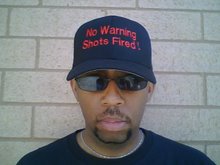
For more information contact info@nowarningshotsfired.com or (919) 308-4233 website http://www.nowarningshotsfired.com

Thursday, April 19, 2012

The Assassination of Hip Hop


The Assassination of Hip Hop:
Did the LA Riots Murder Rebel Music?
 
              TRUTH Minista Paul Scott
 
 
"They know one day we'll learn how to use it/That's why they fear our jungle music"
 
                                            Jungle Music -Jeru tha Damaja


April 29,2012, following the assassination of political Hip Hop artist, Lil J B, in Jasper Texas, America experienced her worst riot in the last 20 years, prompting the authorities to enact Operation You Gots ta Chill.  Like clockwork "responsible" leaders held press conferences urging for calm, while at the same time activists were being hauled off to football stadiums that had been converted into concentration camps. Immediately, all Hip Hop was banned from the radio, accept for songs by Niki Minaj and Drake...


Think this can't happen? Think again.
 
For many years people have been talking about how "Hip Hop is dead." But what must be understood is that the bullet that killed real Hip Hop was fired on April 29, 1992 during the LA Rebellion following the acquittal of the cops that beat Rodney King.  Many Hip Hop historians will tell you, at that moment in time Hip Hop changed forever.
 
Since we know, according to Lou Cannon, in his book Official Negligence  that during the LA Rebellion , something called Operation Cool Response was enacted to keep the natives from gettin' restless, could some operation also have been launched to silence political rap music?
 
It's very possible.
 
Prior to 1992, America had been somewhat tolerant of rap music as entertainment,  however, they underestimated it's potential to spark a revolution. So following the outrage surrounding the so called Rodney King verdict, something had to be done quickly, so they resorted to the old tactics that had been used for centuries to squash political dissent.
 
The suppression of Black voices is nothing new as it can be traced back to the Trans-Atlantic slave trade when the drum was taken from tribes for fear that it would have allowed the  Africans to unite against the slave traders.
 
It must also be noted that the reason that most people are under the false impression that the enslaved Africans did not rebel is because that information has been hidden from history.
 
In his book, American Negro Slave Revolts,  Hebert Aptheker argued that the reason that most people believe that the slaves did not fight back was because of the suppression of information by politicians and newspaper owners who felt that the truth about rebellions would spread fear among Whites and encourage more rebellions among Blacks. So this type of information was kept on the low.
 
This manipulation of facts continued into the 20th century.
 
According to Dr. Patricia Turner in her book , I Heard it Through the Grapevine, during the heated racial period around World War II there were even "rumor clinics" set up to "prevent potentially adverse hear say of all sorts from gaining credibility."
 
Perhaps the most horrendous acts of political suppression happened during the Civil Rights /Vietnam War Era. Attorney William Kunstler wrote in his autobiography,  My Life as a Civil Rights Lawyer,  that H. Rap Brown (whose words were ironically the basis for Big Bank Hank's line on Rappers Delight) was arrested in July 1967 in Cambridge, Maryland for advocating a riot. This  led to the Rap Brown Statute which made it a federal crime for anyone to cross state lines with intention of starting a riot. According to Kunstler,  this law was used in the infamous trial of the Chicago 8 which included the bounding, gagging and chaining of Black Panther Bobby Seale in the courtroom.
 
The entertainment industry has also played a major role in squashing rebellions over the years.
 
Although "urban" radio is seen as the voice of the 'hood, it has played a major role in suppressing more "militant" voices.  
 
According to Brian Ward, in his book , Just My Soul Responding, during the '60s  "militants felt that soul radio discouraged black insurgency and reinforced the racial and economic status quo in subtle ways." Ward states that in 1967, the Take a Look Foundation was established to "use black oriented radio to defuse tensions."
 
So anything with the ability to "move the crowd" has been used for us and against us. Hip Hop is no exception.
 
Rap artists are no stranger to censorship. Back during the early 80's, Grandmaster Flash and The Furious Five couldn't even say "pissin' on stage" on the radio and we still can't figure out what was so bad about Digital Underground's Humpty Hump braggin' how "he once got busy in a Burger King bathroom."
 
However, there is a big difference between censorship of that nature and the suppression of political ideas. There are many examples of Hip Hop artists feeling America's wrath after they crossed the line of demarcation between rap and radical thought.
 
Perhaps one of the best examples is West Coast artist Paris. According to a November 29, 1992 Los Angeles Times article, Time Warner gave him "six figures" as compensation after refusing to put out his Sleeping With the Enemy cd.
 
Also, rapper Too Short recently alleged that his record label made him make sex songs instead of more political music around that same period.
 
In the years since the  LA Rebellion, it has become increasingly harder for artists to fight for their rights to politically party. It must be noted then even rare instances of activism, like Mos Def's performance of Katrina Clap outside of the 2006 MTV Video Music Awards Show are viewed as random acts of radicalism or temporary temper tantrums, not part of a protracted struggle against oppression.
 
Let's be clear.  The reason that you don't hear Dead Prez and Immortal Technique on the radio is not because of their profanity but their "profound-ity." There is no more cussin' on an Immortal Technique record song than  there is on the barely edited , yet radio friendly Marvin's Room by Drake.
 
Fortunately, there is still a small Hip Hop resistance made of activists, writers and artists still bringin' the noise. But speakin' Truth comes with a price.
 
Like Ice T once said "Freedom of speech, just watch what you say."
 
The powers that be don't want the masses to know the truth. And if you are one of the few who dare to speak it, you may find yourself being banned from radio, blacklisted from Hip hop conferences and all other venues.
 
But some body's gotta do it.
 
Like Lupe Fiasco said, "The Show Goes On"
 
"Even if they ban us, they'll never slow my plans up."
 
This is part 3 of the month long series, Rap, Race and Riots": Hip Hop 20 Years After the LA Rebellion 
 
 
TRUTH Minista Paul Scott's weekly column is This Ain't Hip Hop, a column for intelligent Hip Hop headz. He can be reached at info@nowarningshotsfired.com His website is NoWarningShotsFired.com or  Twitter @truthminista


Wednesday, March 2, 2011

How Rodney King Changed Hip Hop

Rap, Riots and Rodney:
How Rodney King Changed Hip Hop

Paul Scott


March 3, 1991. What started off as just another case of a brotha gettin' beat down by the Po Po, would set off a chain of events that would forever change the socio-political dynamics of America, especially for the Hip Hop generation.


Although, the beating of Rodney King by four Los Angeles police officers happened 20 years ago, the shock waves from the event are still being felt today. To grasp the gravity of the situation one has to look at it in historical terms.

The period of the late 80's was,possibly,the most revolutionary since the '60's, as the combination of Reaganomics and racial incidents such as the Virginia Beach and Crown Heights incidents had pushed America, once again to the brink of revolution. There was also a cultural revolution happening ion America, where Black youth were rediscovering the works of heroes such as Malcolm X and Huey P. Newton. The rapidly maturing Hip Hop genre also began to absorb the changes as the party music of the early 80's began to become what Public Enemy front-man, Chuck D, coined "The CNN of Black America."

While the music previously was seen as fad and just a blip on the radar screen of middle America, the idea of rebelling "ghetto youth" using rap music as an unregulated form of information dissemination sent shock America's political foundation.

This is not the first time that the rising collective voice of "the silent minority" became a matter of national security.

According to the March 21, 1993 edition of the Memphis Commercial Appeal, in 1917, a Lt Col. Ralph Van Deman created the Army's black spy network, which snitched on black organizations, even black churches. The article names Robert Morton of Booker T. Washington's Tuskegee Institute and Joel Spingarn, one of the founders of the NAACP,as operatives in the spy network.

In the book, "Heard it Through the Grapevine," Patricia A. Turner wrote that "rumor clinics" were set up during World War II to "prevent potentially adverse hearsay of all sorts from gaining credibility."

Also, although the FBI's COINTELPRO is the best known of the "dirty trick" operations of the Civil Rights /Black Power Era, Clay Risen, in his book "A Nation On Fire: "America in the Wake of the King Assassination," wrote about the Army Operations Center and" its first operations plan for national disturbances, code named Steep Hill." Risen also talks about the U.S. Army Intelligence Command (USAINTC) which included 1000 agents "around tthe country whose job was to spy on militants and "monitor indicators of imminent violence."

The entertainment industry was not immune of the fear of a black uprising. In Peter Doggett's book, "There's a Riot Going On" he wrote about how James Brown was hired by the mayor of Boston , Kevin White, to throw a concert the night after the King murder to keep the natives calm.

From the very beginning it has been clear that America's fear was not the thugs in the street stealing hubcaps but the fear that they may become politicized, intelligent hoodlums. So on April 29, 1992, the day the police officers were acquitted of beating King, the apparatus was already in place to deal with young "urban" youth who were chanting Hip Hop lyrics challenging the system as their mantra.

As, rebellions took place in cities across the country, even the watchful eye of the Fed's underestimated the politicizing of the youth courtesy of rap lyrics. The site of "gangstas" articulating the political ideologies of Frantz Fanon on Night-line caught politicians with their pants down.

According, to the May 11, 1992 Time Magazine article "How TV failed to Get the Real Picture" it was reported that LA mayor Tom Bradley "requested" that in the midst of the chaos that the highly rated "Cosby Show:" air as an exercise in "crisis counter-programming." However, this was not 1986 and black youth were more responsive to the voices of the X-Clan, than they were "Dr. Heathcliff Huxtable."

So, another form of "crisis counter-programing" had to be developed that would insure that rebellions like what happened in LA would never happen again.

Even before the LA Rebellion, President George Bush had instituted the "Weed and Seed Program" which many residents of Los Angeles, such as those interviewed in the book "Uprisng" by Yusef Jah and Sister Shah Keyah considered a spy operation. The official purpose of weed and seed was to "weed" out gang members and in their places "seed"the hood with community programs.

So, we see the same strategy was used in Hip Hop as the biggest threat to this country's racial hegemony " conscious rappers" were weeded out and the industry was seeded with "gangsta" rappers.

One can clearly see how the careers of early conscious rappers suffered because of their courage to speak truth to power. However, the "gangster rappers" of the period became multi-millionaires and were rewarded with movie scripts and endorsement deals.

It is against this historical backdrop that two major post-LA Rebellion developments took place.

First the "no snitching" ethos was taken out of its historical context and was been replaced with a scapegoat for black on black violence and the demonization of entire black neighborhoods. Conveniently forgotten were the various government sponsored snitch operations that had plagued the black community for decades.h

More important is the overall anti-political direction of commercial Hip Hop, where, instead of "Cosby" crisis programming, the Hip Hop artists are now part of preemptive crisis programming, where the minds of the youth are distracted by such things as face tattoos This can help to explain, in part, why the incidents of police brutality in cities such as Cincinnati, New York, Oakland and Houston generated relatively little outcry.

Some may argue that times have changed and the season of "fighting the power" is a part of a bygone era.

However, with incidents of global outrage taking place from Egypt to Wisconsin, maybe not.

Perhaps Ice Cube was right when he once rapped ," April 29th brought power to the people, and we just might see a sequel."

Only the 'hood knows....

Paul Scott can be reached at (919) 451-8283 or info@nowarningshotsfired.com