Go Back to Africa:
Hatin' on Black History
Paul Scott
"Go back to Africa!"
Back when I was in elementary school that statement would either lead to fist fights or tears, depending on the the temperament of the target of the diss. Although many black folks can recall, in vivid detail, the first time they were called the "N word," and how they eventually got over it, for me, "go back to Africa" has not been easy to shake.
See, for black kids like me, being told to take a trip back across the Atlantic was the ultimate insult as it meant being exiled to a place where cannibals with bones in their noses ran around with spears, just waiting to catch some unsuspecting, stiff slippin' so that he could be Sunday evening supper.
After all, this is the image of Africa that black kids were given courtesy of those old Looney Tune cartoons and Tarzan movies.
Unfortunately, the educational system back then did nothing to counter this negative depiction of Africa. The textbooks only reinforced the idea of "the Dark Continent" as a god forsaken place that made no contribution to civilization besides slave labor.
In the early texts , Africa was divided into "white" Africa (Northern Africa) and "black" Africa (Sub Saharan Africa) . So the achievements of the ancient Egyptians were credited to Greek invaders and the empires of Ghana, Mali and Songhai were written out of history, altogether.
Things have not changed much since I was young. An unbiased view of African world history is still sadly missing from most school systems to the detriment of thousands of black children every school year.
While it is widely accepted that Afrocentricity was a product of the Black Power Movement of the late 60's , it actually started more than a hundred years earlier.
According to Dr. Mia Bay in her book "The White Image in the Black Mind" as early as the 1830's scholars such as John Russwurm and David Walker were championing the idea of the African American connection to the great ancient civilizations of Egypt.
In his 1920 essay, "The Souls of White Folks," Dr. WEB Du Bois proudly proclaimed, "Europe has never produced and never will ,in our day, bring forth a single human soul who cannot be matched and over matched in every line of human endeavor by Asia and Africa."
In 1926, Dr. Carter G. Woodson founded Black History Week (later Black History Month). However, as he wrote in his book "The Miseducation of the Negro " in 1933, teaching African Americans that they had accomplished just as much as any other race would "upset the program of the oppressor in Africa and America." Therefore, there has been a concerted effort to confine all talk of black history to the period after the 18th century.
The modern concept of Afrocentricity can be attributed to professors such as Dr Molefi Asante, Dr. John Henrik Clark and Dr. Yosef ben-Jochannan, as their works created a series of arguments and counterarguments over the validity of Afrocentric scholarship in the mid 90's.
Although many bemoan the educational gap between African American children (especially males) and their peers, the suggestion of Afrocentric studies as a viable solution to the problem more times than not falls on deaf ears. Despite the fact that many members of my generation who developed a zeal for reading were inspired by a single book dealing with the African experience whether it be "Stolen Legacy" by Dr.George GM James or "Nile Valley Contributions to Civilization" by Dr. Anthony Browder, many do not believe that books dealing with the African experience could have the same effect on this so called Hip Hop generation.
There are several factors which have served as stumbling blocks to Afrocentricity being included in school curriculum, despite years of prodding by grassroots activists concerned about the welfare of black children.
First, it must be understood that while Afrocentricity is an academic construct, for many, the idea is politically charged. Any call for the affirmation of one's "blackness" is usually drowned out by cries of reverse racism and divisiveness
Secondly, Afrocentricity challenges the very foundation of western thought. Many will shudder at the mere fact of their adoration of Greek culture being challenged by pre 19th Dynasty Egypt.
Finally, the resistance that comes from school administrators and educators who have a vested professional interest in preserving the status quo is perhaps the main obstacle . Either they do not have sufficient knowledge of black history, themselves or do not have the courage to challenge the false doctrine of educational white supremacy. As James Lowen wrote in his book, "Lies my Teacher Told Me," "perhaps the most pervasive theme in our history is the domination of black America by white America."
So they are more comfortable allowing our children to become indoctrinated with Hip Hop lyrics and gang rituals instead of inspirational messages of self empowerment.
As we approach this year's Black History Month observation, parents, activists and concerned citizens must demand not only that the concept of black history be expanded to include the entire scope of the African experience but that it be incorporated year round into the curriculum.
One can only guess how much further along, socially, politically and economically my generation would have been if we had only been exposed to the greatness of African cultural history at an early age.
Sadly, 30 years after the fact , I am still angered by the "Go Back to Africa" comments not so much, now, by the ignorance of my white classmates but by my own ignorance that allowed me to take it as an insult in the first place.
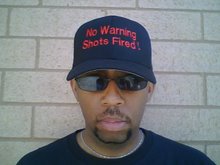
Paul Scott writes for No Warning Shots Fired.com. He can be reached at (919) 451-8283 or info@nowarningshotsfired.com
Coming in February, the Intelligence Over Ignorance "Take Back Black History" lecture tour.
Showing posts with label harry reid. Show all posts
Showing posts with label harry reid. Show all posts
Saturday, January 23, 2010
Saturday, January 9, 2010
Postponing King's Post Racial Dream
Postponing King's Post Racial Dream:
Exaggerated Rumors of Racism's Demise
Paul Scott
The Martin Luther King Jr. Holiday usually ushers in the season when America turns black. The period between MLK Day and the end of February has, traditionally, been the one time of year when black history is taken out of the closet and placed, briefly, in America's living room. However, during an era when many folks are parroting the line that we live in some sort of a "post racial America," the glow of black commemorative celebrations seems to be fading into obscurity.
Some argue that with the election of America's first black president, the glory days of the annual American collective group sing along of "We Shall Overcome" have come and gone. To hear the homies on the Right tell it, racism in the "20 dime" only exists in the minds of a few disillusioned, radical extremists who just can't let go of the past.
Contrary to popular belief, the idea that Americans have somehow, outgrown throwing racial temper tantrums did not begin on November 5, 2008 with the election of Barack Obama. To hear some folks tell it, this country has been "post racial" every since Abraham Lincoln delivered his Emancipation Proclamation in 1863.
I am sure that the newly emancipated slaves were hit with the post racial argument when they dared to argue for their 40 acres and a mule.
I can hear Bill O'Reilly's great, great grandfather yellin' , "Hey, you pinheads got your freedom; stop your whinin' !"
Shortly afterwords, during the short lived Reconstruction Period, the fact that black folks won political offices in the South, for many, was proof positive that they had reached the proverbial Promised Land.
Unfortunately, those advancements were quickly rendered null and void by the Compromise of 1877.
Oh well, back to the drawing board.
During World War I, many black soldiers believed that if they picked up a rifle and risked life and limb to fight for Uncle Sam, they would be welcomed home as heroes instead of returning to the sight of black veterans hanging from trees still sporting their uniforms. This was followed by the Red Summer of 1919 and some of the worst racial unrest in American history. Hardly evidence of a new era of racial equality.
The election of John F. Kennedy signaled to many the death of racism but events like the 1963 Birmingham church bombing that killed four little black girls and the antics of Bull Connor reminded Americans that the rumors of racism's demise had been largely exaggerated.
When Rev. Martin Luther King Jr called 250,000 men ,women and children to Washington DC in 1963 for the big love fest, many believed that, surely, freedom bells would be a ringin' from "the prodigious house tops of New Hampshire" to "every hill and mole hill in Mississippi" and all 'hoods in between. However, an assassin's bullet and days of rioting slapped America back into reality.
Following King's assassination, neither the Johnson Administration's poverty programs nor Richard Nixon's "minority" economic development initiatives prevented Ronald Reagan's "voodoo economics" of the '80's from putting black folks back in the poor house.
The 90's euphoria of the election of the saxophone playin', "honorary black" president Bill Clinton, served only to soften African Americans up for the Republican backlash that resulted in Bush II and such calamities as the Hurricane Katrina aftermath.
Even in today's superficial world of entertainment, some believe that white kids blastin' Lil Wayne on their stereos and wearing their pants hangin' down to their ankles somehow signifies that we are truly one big happy (though slightly dysfunctional) American family.
Last year, Attorney General Eric Holder ticked a lot of people off when he called America a nation of cowards when it comes to discussing race.
Americans aren't scared to discuss race, they just find it more politically expedient to ignore the issue all together.
So, we sit around waiting for the next racist boot to drop or as Dr. King's rival, Malcolm X put it, continue "sitting on a powder keg." Then one day, somebody like Senator Harry Reid makes a bone headed racist comment or some yahoos in Columbia SC go around painting racist graffiti on buildings to disenfranchise black voters. Only then do we feel obligated to yell out the traditional response of mock surprise,
"I can't believe that this sort of thing is happening in 2010 ! " (As if 2009 or 1963 would have made the events more socially acceptable.)
So, as I prepare to sit around the house on January 18th watching the Dr. Martin Luther King documentary for the umpteenth time, I can't help but think about how the more things change, the more they stay the same....
Free at last. Free at last?
Not yet Doc. Not yet.
Paul Scott writes for No Warning Shots Fired.com. He can be reached at (919) 451-8283 or info@nowarningshotsfired.com To join the campaign to bring the No Warning Shots Fired column to your local newspaper, contact the editor, today.
Exaggerated Rumors of Racism's Demise
Paul Scott
The Martin Luther King Jr. Holiday usually ushers in the season when America turns black. The period between MLK Day and the end of February has, traditionally, been the one time of year when black history is taken out of the closet and placed, briefly, in America's living room. However, during an era when many folks are parroting the line that we live in some sort of a "post racial America," the glow of black commemorative celebrations seems to be fading into obscurity.
Some argue that with the election of America's first black president, the glory days of the annual American collective group sing along of "We Shall Overcome" have come and gone. To hear the homies on the Right tell it, racism in the "20 dime" only exists in the minds of a few disillusioned, radical extremists who just can't let go of the past.
Contrary to popular belief, the idea that Americans have somehow, outgrown throwing racial temper tantrums did not begin on November 5, 2008 with the election of Barack Obama. To hear some folks tell it, this country has been "post racial" every since Abraham Lincoln delivered his Emancipation Proclamation in 1863.
I am sure that the newly emancipated slaves were hit with the post racial argument when they dared to argue for their 40 acres and a mule.
I can hear Bill O'Reilly's great, great grandfather yellin' , "Hey, you pinheads got your freedom; stop your whinin' !"
Shortly afterwords, during the short lived Reconstruction Period, the fact that black folks won political offices in the South, for many, was proof positive that they had reached the proverbial Promised Land.
Unfortunately, those advancements were quickly rendered null and void by the Compromise of 1877.
Oh well, back to the drawing board.
During World War I, many black soldiers believed that if they picked up a rifle and risked life and limb to fight for Uncle Sam, they would be welcomed home as heroes instead of returning to the sight of black veterans hanging from trees still sporting their uniforms. This was followed by the Red Summer of 1919 and some of the worst racial unrest in American history. Hardly evidence of a new era of racial equality.
The election of John F. Kennedy signaled to many the death of racism but events like the 1963 Birmingham church bombing that killed four little black girls and the antics of Bull Connor reminded Americans that the rumors of racism's demise had been largely exaggerated.
When Rev. Martin Luther King Jr called 250,000 men ,women and children to Washington DC in 1963 for the big love fest, many believed that, surely, freedom bells would be a ringin' from "the prodigious house tops of New Hampshire" to "every hill and mole hill in Mississippi" and all 'hoods in between. However, an assassin's bullet and days of rioting slapped America back into reality.
Following King's assassination, neither the Johnson Administration's poverty programs nor Richard Nixon's "minority" economic development initiatives prevented Ronald Reagan's "voodoo economics" of the '80's from putting black folks back in the poor house.
The 90's euphoria of the election of the saxophone playin', "honorary black" president Bill Clinton, served only to soften African Americans up for the Republican backlash that resulted in Bush II and such calamities as the Hurricane Katrina aftermath.
Even in today's superficial world of entertainment, some believe that white kids blastin' Lil Wayne on their stereos and wearing their pants hangin' down to their ankles somehow signifies that we are truly one big happy (though slightly dysfunctional) American family.
Last year, Attorney General Eric Holder ticked a lot of people off when he called America a nation of cowards when it comes to discussing race.
Americans aren't scared to discuss race, they just find it more politically expedient to ignore the issue all together.
So, we sit around waiting for the next racist boot to drop or as Dr. King's rival, Malcolm X put it, continue "sitting on a powder keg." Then one day, somebody like Senator Harry Reid makes a bone headed racist comment or some yahoos in Columbia SC go around painting racist graffiti on buildings to disenfranchise black voters. Only then do we feel obligated to yell out the traditional response of mock surprise,
"I can't believe that this sort of thing is happening in 2010 ! " (As if 2009 or 1963 would have made the events more socially acceptable.)
So, as I prepare to sit around the house on January 18th watching the Dr. Martin Luther King documentary for the umpteenth time, I can't help but think about how the more things change, the more they stay the same....
Free at last. Free at last?
Not yet Doc. Not yet.
Paul Scott writes for No Warning Shots Fired.com. He can be reached at (919) 451-8283 or info@nowarningshotsfired.com To join the campaign to bring the No Warning Shots Fired column to your local newspaper, contact the editor, today.


Subscribe to:
Comments (Atom)