Historically Black Coonin':
Institutionalizing Lower Learning
Paul Scott
Dr. Carter G. DuBois was exhausted after pouring all of his energy into an hour long lecture on the colonization of Africa. Out of breath and with sweat pouring down his face, he asked his college freshman class if there were any questions. Nonchalantly smackin' bubble gum, scantily dressed, Lakesia Jackson raised her hand and asked, "Yeah, Doc, can you teach us how to "dougie?" This prompted the rest of the class to break into an impromptu dance routine, transforming Dubois' World History 101 class into a scene from BET's "106 and Park..."
The recent education edition of Ebony magazine featured a picture well dressed Morehouse students standing behind a brotha in a bandanna with his pants saggin' . While the article dealt with the issue of dress codes on black college campuses, the symbolism and deeper meaning of the picture was clear; our future black leaders have become followers of a pop culture that has historically portrayed black people as "coons," "Sambos" and "jungle bunnies."
Once upon a time ,Historically Black Colleges and Universities were the homes of future great politicians, scientists and educators; people who would make a life long commitment to uplifting the race. Unfortunately, the highest aspiration of some students in 2010 is to become the next Nicki Minaj or Waka Flocka Flame. What happened? When did HBCU start standing for "Historically Black Coonin' and Underachievement?"
There was a period in our history when education was honored by black folks. According to WEB DuBois in his book, "Black Reconstruction," the very feeling of inferiority which slavery forced upon them fathered an intense desire to rise out of their condition by means of education."
However, almost 150 years out of slavery, the obtainment of knowledge is no longer seen as a privilege of the more fortunate, only a reason to party for four (or more) years and then get a job.
While many old heads will argue that this is a new phenomenon, as early as 1957, Dr. E. Franklin Frazier wrote in his book, "Black Bourgeoisie" that after World War I the attitude of black college students started to change, as many began to rebel against the "puritanical attitudes" of the northern missionaries who founded the early colleges. They began to see a college degree as merely , " the chief means of achieving social and economic mobility." Herein lies the genesis of our jacked up priorities.
Some argue that during the Civil Rights movement too much attention was placed on integration, giving young African Americans the false impression that educational integration , in and of itself, was the key to social equality. So, instead of honoring our African traditions, they started to want to "be like white folks."
This is not to say that we have not had our shining moments when being black and intelligent was fashionable, as one can point to the Black Power era of the late 60's and early 70's and also the Black consciousness era of the late 80's early 90's, however, it must be noted in the same manner that pop culture turned black revolutionaries into pimps in the 70's, by the mid 90's it had transformed Afro-centric scholars into gangsta rappers.
This is the trend that continues today, as many students have embraced "street culture" as a form of rebellion, producing a generation of "rebels without a clue." In his essay, "The Black Child," Dr. Bobby Wright challenges the false idea held by many African Americans of the Hip Hop generation who believe "white s do not control the streets in the black Community nor the behavior of Blacks on those streets." According to Dr. Wright "whites have more control or at least as much control over those in the streets than over those in universities."
Though often misunderstood, the purpose of WEB DuBois' idea of a talented tenth was never to create a group of elitist, stuck up gangsta snobs, but a group of enlightened African Americans who have as their mission statement the upliftment of those who did not have the opportunity to obtain a higher level of education.
This is what is so disappointing about the attitude on so many college campuses; they have failed in their mission to uplift the downtrodden.
The best example of the problem is the strange relationship between HBCU's and Hip Hop. Every year thousands upon thousands of dollars are paid to Hip Hop artists who promote Black on Black violence, drug dealin' and are living caricatures of historical black negative stereotypes during Homecoming season. Last year, students on the campuses of Florida Agricultural and Mechanical University and North Carolina Agricultural and Technical University protested the use of student funds going towards funding the mental genocide (mentacide) of young black people. Unfortunately, a year later, we still see black universities bank rolling negative behavior.
While the focus of this article is historically black colleges and universities, in truth, it is just a symptom of a larger problem. Black folks in general have lost respect for knowledge, wisdom and understanding. Every school year in every city in America, we are bombarded with numerous stories about the achievement gap between black students and their peers, which gives our children the false impression that they are intellectually inferior to their white counterparts.
It must be noted that the problem of the "dumbing down" of African Americans cannot be just limited to the youth. We are living in a society where grown black folks have made shows such as "The House of Payne" and "Meet the Browns" the most successful in cable TV history, while programs that could enlighten black people struggle to find an audience.
In order to reverse this trend, it is time for those who know better to step up and HBCU's can play a vital role.
Students and administrators on college campuses must get their priorities straight. It is no secret that many HBCU's are located in the middle of the 'hood so it makes no sense to have that many smart black folks gathered in one place and yet have black folks struggling for survival right outside of their gates. HBCU's must not only develop the minds of black young people on campus but must develop ways to heal the 'hoods that surround them. Also, while many universities train their students to become economists and business leaders, why are black businesses in their cities struggling to make ends meet, especially black bookstores?
Lastly, HBCU's must make better use of student funds for hosting programs for not only the students but for the local black community. It is a shame that the same student government association that can find $20,000 dollars to bring Young Jeezy on campus for one night to rap about "Thug Motivation" cannot find the resources to bring in Afro-centric scholars, researchers and historians to campus to hold workshops to motivate the students to be strong black men and women.
So, black students, the choice is yours, are you going to take a stand or continue to watch your people being destroyed for lack of knowledge ?
As Dr. Carter G Woodson wrote in the "Mis Education of the Negro," " No people can go forward when the majority of those who know better have chosen to go backward."
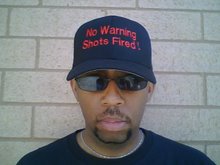
Paul Scott writes for No Warning Shots Fired.com. For more information on the Intelligence Over Ignorance lecture series on Race, Rap Religion and Revolution contact (919) 451-8283 or info@nowarningshotsfired.com
Showing posts with label education. Show all posts
Showing posts with label education. Show all posts
Saturday, September 25, 2010
Sunday, September 27, 2009
Follow the Leader: In Search of Hip Hop's Talented Tenth
Follow the Leader:
In Search of Hip Hop's Talented Tenth
Paul Scott
"I'm here to break away the chains, take away the pains, remake the brains..."
Follow the Leader -Eric B and Rakim 1988
Twenty years ago the members of Public Enemy announced that they were going to raise up a nation of 5,000 black leaders. For a time it seemed to be working as many black folks started reading Afro-centric literature and listening to lectures by black scholars for the first time. This is not much different than Dr. WEB Du Bois's efforts a century earlier to cultivate a "talented tenth" that was supposed to uplift the black race. But in 2009, when ignorance is produced in mass quantities, the question that we must ask is where are they now?
If Du Bois's challenge was to uplift a people just two generations up from slavery, why do we find it so difficult, in the 21st century, to organize against ignorance?
During the era 1988-92, members of the Hip Hop Nation tried to develop a massive mass education project . For example, KRS not only tried to organize H.E.A.L. (Human Education Against Lies) but also released the timeless track, "My Philosophy" which, till this day, is still one of the greatest arguments against anti-intellectualism ever recorded.
Groups like the X-Clan moved a whole generation towards Afro-centric thought and exposed a nation of black youth who had only known of Rosa Parks and Dr. Martin Luther King to the philosophy of Garvey-ism via songs such as "Funkin' Lesson."
The impact of the 5% Nation (NGE) cannot be overstated as groups such as Brand Nubian and Poor Righteous Teachers saw it as their spiritual mission to "civilize the uncivilized."
However, by 1992, the age of enlightenment gave way to Hip Hop's Dark Age, in which, we still find ourselves 17 years later.
The reasons for this backwards journey are many.
However, we must start with the nature of the beast, the music industry ,itself, and it's relationship to "revolutionary" music a generation prior to the "conscious" Hip Hop age.
In his book, "There's a Riot Going On," Peter Doggett writes of a meeting of advertising agencies and entertainment conglomerates that was held in October of 1968 called "Selling the American Youth Market," which was followed two months later by a Columbia Records marketing campaign called "The Revolutionaries are on Columbia." Thus, the revolutionary energy of the Vietnam Era was quickly co-opted and transformed into a Capitalist marketing scheme. The music that was once radical became politically ambiguous, at best.
If we juxtapose this with progressive Hip Hop music, we see that with the commercialization of the politically charged rap it began to loose it's militancy , attempting to attract the coveted crossover market. This was also exacerbated by an American political structure that has always seen intelligent African Americans as threats to national security. Not to mention a corporate America that has grabbed every opportunity to "dumb down" the youth in an effort to make them more vulnerable to marketing schemes and corporate exploitation.
While many of the causes have been external, they have been internal, as well.
Although, members of the era of conscious Hip Hop waxed poetic about the conspiracy to dumb down black youth, they were ill prepared to do anything about it. So why should we be surprised in the 21st century that the fruits of this labor have come to fruition? Also, we must admit that too many in that era gave VIP (Very Ignorant People) passes to the early gangsta rappers in the name of Hip Hop unity. This has produced the dilemma in which we find ourselves, today.
While Kwame Ture' spoke about "making the unconscious, conscious" until his dying day, what has developed is an "anti-conscious" movement. Biblically speaking, they are those who are destroyed not for their lack of Knowledge but for their rejection of it.
This is the target audience of today's representatives of what is passing for a black consciousness movement, many of whom were either in elementary school or not even born at the height of the political rap era, 20 years ago.
The problem with the new school Hip Hop intelligentsia is that they have so much dumbed down their messages that they have become the antithesis of the mission to uplift black people. Many of them have become less disciples of Rakim and more so followers of Nas, whose lyrical contradictions oft times outweigh their potentially, powerful impact. Also, because of the misuse of social networking sites such as youtube and Twitter, they have tried to out-gangsta the gangsta rappers , often bitterly attacking those who should be their comrades in the struggle.
Perhaps the biggest fault lies at the door of those who Du Bois would have referred to as his talented tenth; the college educated, as many of the music moguls with higher education are the main purveyors of the worst examples of anti-intellectualism; Sean Combs, Dame Dash, Suge Night, David Banner, etc.
While the call for 5,000 black leaders in the 80's was admirable, what we need now is a call for 5,000 black poor righteous teachers who realize that ,despite all the rheatoric, the greatest threat to global white supremacy (misnomered racism) is not a gun but a book.
The battle for the minds must start in our own communities as we must dedicate our lives to raising the consciousness of those around us.
Because, as Du Bois wrote in 1903 in "The Negro Problem," "if you do not lift them up, they will pull you down."
Paul Scott writes for No Warning Shots Fired.com. He can be reached at info@nowarningshotsfired.com or (919) 451-8283 To learn more about The Intelligence Over Ignorance Campaign visit http://www.ioimovement.com/
In Search of Hip Hop's Talented Tenth
Paul Scott
"I'm here to break away the chains, take away the pains, remake the brains..."
Follow the Leader -Eric B and Rakim 1988
Twenty years ago the members of Public Enemy announced that they were going to raise up a nation of 5,000 black leaders. For a time it seemed to be working as many black folks started reading Afro-centric literature and listening to lectures by black scholars for the first time. This is not much different than Dr. WEB Du Bois's efforts a century earlier to cultivate a "talented tenth" that was supposed to uplift the black race. But in 2009, when ignorance is produced in mass quantities, the question that we must ask is where are they now?
If Du Bois's challenge was to uplift a people just two generations up from slavery, why do we find it so difficult, in the 21st century, to organize against ignorance?
During the era 1988-92, members of the Hip Hop Nation tried to develop a massive mass education project . For example, KRS not only tried to organize H.E.A.L. (Human Education Against Lies) but also released the timeless track, "My Philosophy" which, till this day, is still one of the greatest arguments against anti-intellectualism ever recorded.
Groups like the X-Clan moved a whole generation towards Afro-centric thought and exposed a nation of black youth who had only known of Rosa Parks and Dr. Martin Luther King to the philosophy of Garvey-ism via songs such as "Funkin' Lesson."
The impact of the 5% Nation (NGE) cannot be overstated as groups such as Brand Nubian and Poor Righteous Teachers saw it as their spiritual mission to "civilize the uncivilized."
However, by 1992, the age of enlightenment gave way to Hip Hop's Dark Age, in which, we still find ourselves 17 years later.
The reasons for this backwards journey are many.
However, we must start with the nature of the beast, the music industry ,itself, and it's relationship to "revolutionary" music a generation prior to the "conscious" Hip Hop age.
In his book, "There's a Riot Going On," Peter Doggett writes of a meeting of advertising agencies and entertainment conglomerates that was held in October of 1968 called "Selling the American Youth Market," which was followed two months later by a Columbia Records marketing campaign called "The Revolutionaries are on Columbia." Thus, the revolutionary energy of the Vietnam Era was quickly co-opted and transformed into a Capitalist marketing scheme. The music that was once radical became politically ambiguous, at best.
If we juxtapose this with progressive Hip Hop music, we see that with the commercialization of the politically charged rap it began to loose it's militancy , attempting to attract the coveted crossover market. This was also exacerbated by an American political structure that has always seen intelligent African Americans as threats to national security. Not to mention a corporate America that has grabbed every opportunity to "dumb down" the youth in an effort to make them more vulnerable to marketing schemes and corporate exploitation.
While many of the causes have been external, they have been internal, as well.
Although, members of the era of conscious Hip Hop waxed poetic about the conspiracy to dumb down black youth, they were ill prepared to do anything about it. So why should we be surprised in the 21st century that the fruits of this labor have come to fruition? Also, we must admit that too many in that era gave VIP (Very Ignorant People) passes to the early gangsta rappers in the name of Hip Hop unity. This has produced the dilemma in which we find ourselves, today.
While Kwame Ture' spoke about "making the unconscious, conscious" until his dying day, what has developed is an "anti-conscious" movement. Biblically speaking, they are those who are destroyed not for their lack of Knowledge but for their rejection of it.
This is the target audience of today's representatives of what is passing for a black consciousness movement, many of whom were either in elementary school or not even born at the height of the political rap era, 20 years ago.
The problem with the new school Hip Hop intelligentsia is that they have so much dumbed down their messages that they have become the antithesis of the mission to uplift black people. Many of them have become less disciples of Rakim and more so followers of Nas, whose lyrical contradictions oft times outweigh their potentially, powerful impact. Also, because of the misuse of social networking sites such as youtube and Twitter, they have tried to out-gangsta the gangsta rappers , often bitterly attacking those who should be their comrades in the struggle.
Perhaps the biggest fault lies at the door of those who Du Bois would have referred to as his talented tenth; the college educated, as many of the music moguls with higher education are the main purveyors of the worst examples of anti-intellectualism; Sean Combs, Dame Dash, Suge Night, David Banner, etc.
While the call for 5,000 black leaders in the 80's was admirable, what we need now is a call for 5,000 black poor righteous teachers who realize that ,despite all the rheatoric, the greatest threat to global white supremacy (misnomered racism) is not a gun but a book.
The battle for the minds must start in our own communities as we must dedicate our lives to raising the consciousness of those around us.
Because, as Du Bois wrote in 1903 in "The Negro Problem," "if you do not lift them up, they will pull you down."
Paul Scott writes for No Warning Shots Fired.com. He can be reached at info@nowarningshotsfired.com or (919) 451-8283 To learn more about The Intelligence Over Ignorance Campaign visit http://www.ioimovement.com/


Thursday, May 14, 2009
Mis-Education of Black Children
The Mis-education of Black Children
Paul Scott
In 1933, the great educator and founder of Negro History Week (now Black History Month), Dr. Carter G. Woodson wrote, "If you control a man's thinking, you do not have to worry about his actions. Although, "The Mis-education of the Negro" was written 75 years ago, the issues raised then are just as relevent today not only for African American youth but also for those who strive to teach them.
Every year, we are confronted with the age old question of why black youth are not achieving at the same rate as other racial groups. The reason that we continually raise the same questions is that very few have the courage to give the correct answer. While many would write the under achievement of African American children off as some sort of genetic deficiency, the truth is that the reasons are economic, social and political.
First, the depth of the destruction of African culture over a 400 year period via the TransAtlantic slave Trade is rarely discussed in the context of its impact on future generations. Although this is well researched in Walter Rodney's book "How Europe Under Developed Africa, how many people have heard of this outstanding work?
Also, it cannot be overstated that 140 years ago, teaching black people to read was a crime punishable by death. Why this fact is not highlighted as a probable cause for the current educational dilemma of black children has more to do with historical amnesia than historical accuracy.
While segregated schools may have had their good points ,as far as the attention given to the needs of black children, the schools were separate and unequal, lacking the resources to give black children an equal education.
Even as late as early as 20 years ago, members of my generation walked out of college graduation ceremonies to face the heartbreaking reality that we would earn considerably less than our white counterparts. This did not exactly serve as motivation for future generations to strive for academic excellence. Also, while grandma's sage advice that we had to be "twice as good as white folks" was well intentioned, this was an unfair burden to place on the shoulders of young African Americans.
This is why the Hip Hop generation has developed such slang terms such as "Street Knowledge" and "Thug Motivation" in order to compensate for the economic/educational disparity that they cannot understand nor properly articulate.
The media have never shown much interest in making the so called black "Hip Hop Generation" more culturally and politically conscious. Despite the large population of African Americans in the Triangle area, there are hardly any talk shows that supply African centered information to the community. However, there is no shortage of outlets that glamorize anti intellectualism. Even in the world of print media, since young black Americans are not the target audience, there is little effort to hire columnists to speak to their issues
As many Americans are using "change" as a buzz word this political season, we must understand that not only must there be change in politics but education and economics, as well.
We must come up with new and innovative ways to close the information/education gap.
The black community must produce a list of books that all black children should read and present that information to the Board of Education, as well as the community, at large. This list must include the works of Dr. Carter G. Woodson, Dr. Amos Wilson and a host of others. Secondly, we must realize that "cleaning up Hip Hop" means more than just deleting dirty words but using the music to educate as much as entertain. Contrary to popular belief, there are Hip Hop artists that struggle to use their art to educate the masses.
Lastly, we must pressure the local media to develop outlets that will discuss the black experience in its totality, not just crime rates and other negative statistics.
Although the entire community will benefit from a truly enlightened populace, the burden of the responsibility to counter mis-education lies within the black community, itself.
As Bob Marley once sang, "Emancipate yourselves from mental slavery, none but ourselves can free our minds."
Paul Scott writes for No Warning Shots Fired.com. He can be reached at (919) 451-8283 info@nowarningshotsfired.com
Paul Scott
In 1933, the great educator and founder of Negro History Week (now Black History Month), Dr. Carter G. Woodson wrote, "If you control a man's thinking, you do not have to worry about his actions. Although, "The Mis-education of the Negro" was written 75 years ago, the issues raised then are just as relevent today not only for African American youth but also for those who strive to teach them.
Every year, we are confronted with the age old question of why black youth are not achieving at the same rate as other racial groups. The reason that we continually raise the same questions is that very few have the courage to give the correct answer. While many would write the under achievement of African American children off as some sort of genetic deficiency, the truth is that the reasons are economic, social and political.
First, the depth of the destruction of African culture over a 400 year period via the TransAtlantic slave Trade is rarely discussed in the context of its impact on future generations. Although this is well researched in Walter Rodney's book "How Europe Under Developed Africa, how many people have heard of this outstanding work?
Also, it cannot be overstated that 140 years ago, teaching black people to read was a crime punishable by death. Why this fact is not highlighted as a probable cause for the current educational dilemma of black children has more to do with historical amnesia than historical accuracy.
While segregated schools may have had their good points ,as far as the attention given to the needs of black children, the schools were separate and unequal, lacking the resources to give black children an equal education.
Even as late as early as 20 years ago, members of my generation walked out of college graduation ceremonies to face the heartbreaking reality that we would earn considerably less than our white counterparts. This did not exactly serve as motivation for future generations to strive for academic excellence. Also, while grandma's sage advice that we had to be "twice as good as white folks" was well intentioned, this was an unfair burden to place on the shoulders of young African Americans.
This is why the Hip Hop generation has developed such slang terms such as "Street Knowledge" and "Thug Motivation" in order to compensate for the economic/educational disparity that they cannot understand nor properly articulate.
The media have never shown much interest in making the so called black "Hip Hop Generation" more culturally and politically conscious. Despite the large population of African Americans in the Triangle area, there are hardly any talk shows that supply African centered information to the community. However, there is no shortage of outlets that glamorize anti intellectualism. Even in the world of print media, since young black Americans are not the target audience, there is little effort to hire columnists to speak to their issues
As many Americans are using "change" as a buzz word this political season, we must understand that not only must there be change in politics but education and economics, as well.
We must come up with new and innovative ways to close the information/education gap.
The black community must produce a list of books that all black children should read and present that information to the Board of Education, as well as the community, at large. This list must include the works of Dr. Carter G. Woodson, Dr. Amos Wilson and a host of others. Secondly, we must realize that "cleaning up Hip Hop" means more than just deleting dirty words but using the music to educate as much as entertain. Contrary to popular belief, there are Hip Hop artists that struggle to use their art to educate the masses.
Lastly, we must pressure the local media to develop outlets that will discuss the black experience in its totality, not just crime rates and other negative statistics.
Although the entire community will benefit from a truly enlightened populace, the burden of the responsibility to counter mis-education lies within the black community, itself.
As Bob Marley once sang, "Emancipate yourselves from mental slavery, none but ourselves can free our minds."
Paul Scott writes for No Warning Shots Fired.com. He can be reached at (919) 451-8283 info@nowarningshotsfired.com
Tuesday, March 17, 2009
NWSF Presents: New Hip Hop Workshop
No Warning Shots Fired.com presents "Everything You Ever Wanted to Know about Hip Hop (but were afraid that someone would shoot you if you asked.)
During the workshop/interactive lecture, TRUTH Minista Paul Scott will engage the audience with a historical, socio-political discussion of Hip Hop from its origins to the present.
The workshop will focus on ways for parents, teachers and concerned community members to get a better understanding of Hip Hop, detailing the pros and the cons.
For more information contact (919) 451-8283 or info@nowarningshotsfired.com
During the workshop/interactive lecture, TRUTH Minista Paul Scott will engage the audience with a historical, socio-political discussion of Hip Hop from its origins to the present.
The workshop will focus on ways for parents, teachers and concerned community members to get a better understanding of Hip Hop, detailing the pros and the cons.
For more information contact (919) 451-8283 or info@nowarningshotsfired.com
Monday, November 24, 2008
NWSF Bullet: Music to Educate
For the past few years, I have been going around the hood passing out free DVD's/CD's of my speeches along with music and interviews that I have done with other activists.
I actually got the idea from Dr. Jared Ball, a professor at Morgan State in Baltimore. For the last few years he has been making free mix tapes available to educate communities across the country.
I was actually on one of the mixtapes back in 12/05
Check out the link below for some of the mix tapes:
http://www.voxunion.com/coup/coup.html
I actually got the idea from Dr. Jared Ball, a professor at Morgan State in Baltimore. For the last few years he has been making free mix tapes available to educate communities across the country.
I was actually on one of the mixtapes back in 12/05
Check out the link below for some of the mix tapes:
http://www.voxunion.com/coup/coup.html
Sunday, February 10, 2008
Community in Crisis Town Hall Meeting
A room full of people gathering at the Know Book Store on Fayetteville St in Durham, yesterday, with a clear message...
"Or community is in a crisis and black folks must find the solution."
The meeting, moderated by Cimerron Bandele of the African Diasporin Nationalist Society, featured a panel discussion by area activists such as Larry and Denise Hester, discussing solutions to the problems facing Durham.
One of the issues that was dicussed was the history and future of Fayetteville St, which according to Larry Hester is the only black historic district in Durham. The Hesters, who own the popular Phoenix Square shopping area are concerened that with the influx of outside developers and the expansion plans of North Carolina Central University, not only wil elderly residents be deplaced but the entire historic district is under assault.
The meeting also discussed the drought problem and its effect on the black community.
As one speaker put it, if Durham runs out of water who do you think is going to be the last one to get a drink?
Other topics included the the incarceration of black males, the need for afrocentric educational reform and the recent attempts by the media to promote brown on black violence.
The gathering was just the first of several town hall meetings and events planned in areas throughout Durham.
As Bandele put it,
"Today, we're behind four walls but tomorrow we're in the streets.
Min. Paul Scott's blog is http://www.nowarningshotsfired.com/ He can be reached at (919) 451-8283
"Or community is in a crisis and black folks must find the solution."
The meeting, moderated by Cimerron Bandele of the African Diasporin Nationalist Society, featured a panel discussion by area activists such as Larry and Denise Hester, discussing solutions to the problems facing Durham.
One of the issues that was dicussed was the history and future of Fayetteville St, which according to Larry Hester is the only black historic district in Durham. The Hesters, who own the popular Phoenix Square shopping area are concerened that with the influx of outside developers and the expansion plans of North Carolina Central University, not only wil elderly residents be deplaced but the entire historic district is under assault.
The meeting also discussed the drought problem and its effect on the black community.
As one speaker put it, if Durham runs out of water who do you think is going to be the last one to get a drink?
Other topics included the the incarceration of black males, the need for afrocentric educational reform and the recent attempts by the media to promote brown on black violence.
The gathering was just the first of several town hall meetings and events planned in areas throughout Durham.
As Bandele put it,
"Today, we're behind four walls but tomorrow we're in the streets.
Min. Paul Scott's blog is http://www.nowarningshotsfired.com/ He can be reached at (919) 451-8283
Subscribe to:
Posts (Atom)