|
No, Virginia. Rick Ross
Ain’t Gangsta:
Rap’s X-mas Reality Check TRUTH Minista Paul Scott “In the real world these just people with ideas They just like me and you when the smoke and camera disappear” Hip Hop-Dead Prez
When
Virgina “V-Gangsta” O’Hanlon’s homegirl broke the news to her that Santa Claus
was a big fat fake, it didn’t faze her one bit. As long as she still got her Lil
Wayne CD for Christmas she was good. But years later when she found out that her
new favorite rapper, Rick Ross, wasn't the gangster she had grown to know and
love, she went into a violent rage followed by a major depression lasting
several days...
Recently, mainstream America got hip to something that “the ‘hood” already knew. Their beloved Grammy- nominated gangsta, William “Rick Ross” Roberts wasn’t a gangster after all. He just played one on TV. This has sent his suburban fans searching for a “Yes, Virginia , there is a Santa Claus” type of affirmation. Just like Virginia O'Hanlon, when she wrote the famous letter to the New York Sun back in 1897, asking for reassurance that the Jolly Ol Soul was real after her friends told her that Ol' St. Nick was just a trick, Rick Ross fans are shedin’ tears in their eggnog, yellin' “Say it ain’t so.” Last week, Rick Ross cancelled the remaining dates of his MMG (Maybach Music Group) Tour, reportedly , because of You tube videos posted by members of The Gangster Disciples who threatened to step to Roberts for shoutin' out their leader's name on one of his songs and using their gang symbol on a CD cover without breakin’ them off a little royalty cash . To make matters worst, the rapper has beef with convicted drug dealer, Freeway Ricky Ross, of the infamous Iran/Contra/Compton cocaine connection that was alleged in the 90’s by the late reporter Gary Webb . Apparently Freeway Ricky Ross is miffed that rapper Rick Ross has the nerve to use his popularity of contributing to the genocide of thousands of children in the 'hood to sell records that glamorize the genocide of thousands of children in the 'hood. Not to mention the die hard Tupac Shakur fans who are hatin’ on him for having the audacity to proclaim himself the reincarnation of the " father of THUG LIFE." However, the main people upset by the revoking of Rick Ross's ghetto pass are members of his Caucasian crossover fan club who ,vicariously, live the ghetto life thru their favorite rappers from the comfort of their spacious homes in the 'burbs. Someone once said, insubstantially, that 80% of the kids who buy rap music are white. While we are not sure how he, scientifically, arrived at that figure,he's probably darn close if you look at whose parents have the most disposable income . During the mid to late 70's, Hip Hop started as an obscure form of party music barely known outside of four of the five NYC boroughs. However, with the release of Grandmaster Flash and the Furious Five’s “The Message,” rap music became white America's long range telescope for viewing urban blight. During the late 80’s, Public Enemy frontman, Chuck D, proclaimed rap “the CNN of Black America.” Shortly after this pronouncement , NWA brought gangsta rap to the forefront and rappers became the epitome of Tall, Dark and Dumb, the dudes that all of the cool white guys wanted to be like and the hip white chicks wanted to be with. The best example of the origin of this idea would probably be the miraculous transformation of nerdy" Bud Bundy" to “Grandmaster B” from the early 90’s sitcom “Married With Children.” So for white kids, “gangsta rappers” were the perfect Christmas gift, like a life size, thugged out version of a GI Joe with the kung fu grip. Or Shirley Temple’s “Mr. Bojangles” with street swagger. willing to buck dance at the drop of a dollar. But last week, the charade came to an abrupt ending, when middle America had to come to grips with the fact that maybe their superheroes of the ‘hood weren’t so super ,after all. They finally had to deal with the reality that it was all one big joke and the joke was on them. Although the music industry marketing gurus could spin the well known fact in Hip Hop circles that Rick Ross was a former correctional officer, earning him the title ala rapper 50 cent, “Officer Ricky," the idea that a feared gangsta rapper is scared of gangsters is an unforgivable sin in Hip Hop. He might as well have done a duet with Barry Manilow. But it's not just William Roberts who is perpretratin a fraud , many of the fiercest gangsta rappers and producers in the industry are actually college educated, from Suge Knight to Sean “Puffy” Combs. Even Robert ‘s fellow Grammy nominee Tauheed “2 Chainz” Epps attended college on an athletic scholarship during the mid 90’s, despite his lyrical content that centers around “big booty hoes.” But the question is, now that the jack- in- the- box is out of Santa’s bag, where does Hip Hop go from here? The music executives can either allow Hip Hop to grow up and once again become socially relevant or they can continue on their fool’s errand of trying to fool all of the people all of the time. History teaches us that they will probably try to make a feeble attempt at the latter. I mean if they can turn a C.O. into an O.G., I guess anything is possible. But in reality, the future direction of Hip Hop depends on the gullibility of the consumer. Just like the cop- out that a parent gives his child when she finds her toy pony hidden in the garage two days before Christmas.
"Santa exists as long as you believe he does"
So does gangsta rap, Virginia. So does gangsta rap."
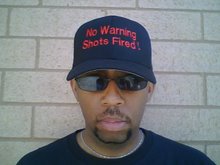
TRUTH Minista Paul Scott's website is No Warning Shots
Fired.com. He can be reached at info@nowarningshotsfired.com or Follow on Twitter
@truthminista
|
Showing posts with label Officer Ricky. Show all posts
Showing posts with label Officer Ricky. Show all posts
Monday, December 10, 2012
No, Virginia. Rick Ross Ain't Gangsta !


Monday, February 16, 2009
The Failure of Hip Hop Journalism
The Failure of Hip Hop Journalism:
Rewritin' Hip Hop History
Paul Scott
To hear some Hip Hop journalists tell it, there was a time when Hip Hop magazines were the vanguard of the Revolution. Not since David Walker's "Appeal" were there such powerful writings that shook the foundations of the system. Some believe that if it wasn't for Hip Hop journalists , slavery would have been back in effect after the Reagan administration.
However, contrary to popular belief, the Source was never "The Negro World" nor was XXL ever the "The Messenger."
This is not to say that Hip Hop magazines have not had their shining moments. XXL's first couple of issues showed promise that something new might have been on the horizon and the Source did give the early conscious rappers a voice in its early years. But that had more to do with the fact that Hip Hop, itself, was going through a brief conscious era more so than the Source shaping the direction of Hip Hop. The writers were merely reporting what was happening in Hip Hop not plotting a new "vanglorious" course.
Today the Source does have a few interesting articles especially in its "Ear to the Street" section, however, this is an exception to the rule. For the most part Hip Hop journalists give the same rehashed stories over and over again regarding beefs, street credibility and the obligatory paragraph about a rappers love for weed.
The goal of Hip Hop magazines has and always will be to sell subscriptions, not to lead black folks to the promised land. For the most part, the mission of Hip Hop journalists has been to give pseudo black culture to mainstream America in small doses at a time.
In other words, the cat who buys a Hip Hop magazine in 2009, is the same dude who bought that Alfonso Ribeiro "Learn How to Breakdance" book back in the day.
This is not to say that the writers of 20 years ago were any different than most Hip Hop artists whose end game strategy was to gain acceptance by the mainstream and to prove once and for all that rappers were people, too.
To suggest that there was ever a period when Hip Hop journalists/artists ever consistently put fighting the power before fighting for profit is a myth that has been repeated so much that it has become part of the official Hip Hop canon. Of course, there were some writers who used their skills as tools to empower the masses. Even today a few still exist such as Davey D and Rosa Clemente, however they have found ways to move the crowd , mostly, outside of mainstream avenues. Also, there are a few Hip Hop artists who have used the art to deliver political commentary to the streets such as Pittsburgh's Jasiri X.
While some would write about "The Poor Righteous Teachers," back in tha day, few wanted to be one, as assimilation into the mainstream was more lucrative. This is the true side of Hip Hop journalism that few want to discuss, therefore we become victims of historical amnesia.
Hip Hop history becomes problematic when, like the rest of American history it becomes revisionist. Those who are entrusted to record historical events tend to give themselves or their causes greater roles than they actually deserve. Therefore, many who see as their crusade to return Hip Hop back to a "Golden Age" are trying to time travel back to an age that never really existed to that degree.
If we are ,truly, trying to move Hip Hop forward, we must first dispel the myths of the past.
First of all, Hip Hop journalism has never been revolutionary in and of itself. We must remember, as much as we try to extend the time period, out of the almost 30 years since Hip Hop was first put on wax, the period of "conscious Hip Hop" was relatively short, barely lasting four years. What ever conscious Hip Hop of that era was, it was not able to engage itself in a protracted struggle against the powers that be. At best the writers did the best they could to enlighten the masses within the narrow confines imposed on them by those who had a vested interest in keeping young urban America in the dark.
While some writers consider themselves "underground Hip Hop journalists" they face the same contradictions as underground Hip Hop artists. As Huey P Newton said "movements are driven underground" through some form of political repression. The writings of true revolutionaries are quickly labeled as contraband by the oppressors, therefore you would not be able to buy them for $4.99 at your local grocery store.
We must also remember that conscious Hip Hop began to lose it's "pro-blackness," as soon as it began to gain acceptance by the mainstream. What could have been a force to teach unadulterated black history/culture to the youth soon became just another way for white kids to live the hood life vicariously through Hip Hop. They could drink of the rivers of blackness without experiencing the after taste. Although, we may wax nostalgic about the pro-blackness of the Hip Hop journalists during '88-92, just like the writers of the Harlem Renaissance , they were never allowed to reach their full potentials because of the influences of outside forces. (Read "Crisis of the Negro Intellectual by Harold Cruse.)
Despite all the new prognostications of Hip Hop journalism's sudden growth spurt into collective maturity since the last election, it still is well below the intellectual level that it should have reached during its 20 years of existence . While some refer to the shallowness of today's Soulja Boy -esque Hip Hop as ring tone music, today's Hip Hop writings can be best described as "text message journalism." Thus, it has not evolved much from where it was two decades ago,
Out of all the things Hip Hop magazines coulda/shoulda done to advance the culture, their crowning achievement was promoting the East Coast/West Coast Beef.
If Hip Hop is to move forward the scribes must see the past as its was and not through rose colored Gazelles
As the saying goes, "those who don't learn their history are bound to repeat it."
Paul Scott, the Hip Hop TRUTH Minista, writes for No Warning Shots Fired.com http://www.nowarningshotsfired.com
He can be reached at info@nowarningshotsfired.com (919) 451-8283
Rewritin' Hip Hop History
Paul Scott
To hear some Hip Hop journalists tell it, there was a time when Hip Hop magazines were the vanguard of the Revolution. Not since David Walker's "Appeal" were there such powerful writings that shook the foundations of the system. Some believe that if it wasn't for Hip Hop journalists , slavery would have been back in effect after the Reagan administration.
However, contrary to popular belief, the Source was never "The Negro World" nor was XXL ever the "The Messenger."
This is not to say that Hip Hop magazines have not had their shining moments. XXL's first couple of issues showed promise that something new might have been on the horizon and the Source did give the early conscious rappers a voice in its early years. But that had more to do with the fact that Hip Hop, itself, was going through a brief conscious era more so than the Source shaping the direction of Hip Hop. The writers were merely reporting what was happening in Hip Hop not plotting a new "vanglorious" course.
Today the Source does have a few interesting articles especially in its "Ear to the Street" section, however, this is an exception to the rule. For the most part Hip Hop journalists give the same rehashed stories over and over again regarding beefs, street credibility and the obligatory paragraph about a rappers love for weed.
The goal of Hip Hop magazines has and always will be to sell subscriptions, not to lead black folks to the promised land. For the most part, the mission of Hip Hop journalists has been to give pseudo black culture to mainstream America in small doses at a time.
In other words, the cat who buys a Hip Hop magazine in 2009, is the same dude who bought that Alfonso Ribeiro "Learn How to Breakdance" book back in the day.
This is not to say that the writers of 20 years ago were any different than most Hip Hop artists whose end game strategy was to gain acceptance by the mainstream and to prove once and for all that rappers were people, too.
To suggest that there was ever a period when Hip Hop journalists/artists ever consistently put fighting the power before fighting for profit is a myth that has been repeated so much that it has become part of the official Hip Hop canon. Of course, there were some writers who used their skills as tools to empower the masses. Even today a few still exist such as Davey D and Rosa Clemente, however they have found ways to move the crowd , mostly, outside of mainstream avenues. Also, there are a few Hip Hop artists who have used the art to deliver political commentary to the streets such as Pittsburgh's Jasiri X.
While some would write about "The Poor Righteous Teachers," back in tha day, few wanted to be one, as assimilation into the mainstream was more lucrative. This is the true side of Hip Hop journalism that few want to discuss, therefore we become victims of historical amnesia.
Hip Hop history becomes problematic when, like the rest of American history it becomes revisionist. Those who are entrusted to record historical events tend to give themselves or their causes greater roles than they actually deserve. Therefore, many who see as their crusade to return Hip Hop back to a "Golden Age" are trying to time travel back to an age that never really existed to that degree.
If we are ,truly, trying to move Hip Hop forward, we must first dispel the myths of the past.
First of all, Hip Hop journalism has never been revolutionary in and of itself. We must remember, as much as we try to extend the time period, out of the almost 30 years since Hip Hop was first put on wax, the period of "conscious Hip Hop" was relatively short, barely lasting four years. What ever conscious Hip Hop of that era was, it was not able to engage itself in a protracted struggle against the powers that be. At best the writers did the best they could to enlighten the masses within the narrow confines imposed on them by those who had a vested interest in keeping young urban America in the dark.
While some writers consider themselves "underground Hip Hop journalists" they face the same contradictions as underground Hip Hop artists. As Huey P Newton said "movements are driven underground" through some form of political repression. The writings of true revolutionaries are quickly labeled as contraband by the oppressors, therefore you would not be able to buy them for $4.99 at your local grocery store.
We must also remember that conscious Hip Hop began to lose it's "pro-blackness," as soon as it began to gain acceptance by the mainstream. What could have been a force to teach unadulterated black history/culture to the youth soon became just another way for white kids to live the hood life vicariously through Hip Hop. They could drink of the rivers of blackness without experiencing the after taste. Although, we may wax nostalgic about the pro-blackness of the Hip Hop journalists during '88-92, just like the writers of the Harlem Renaissance , they were never allowed to reach their full potentials because of the influences of outside forces. (Read "Crisis of the Negro Intellectual by Harold Cruse.)
Despite all the new prognostications of Hip Hop journalism's sudden growth spurt into collective maturity since the last election, it still is well below the intellectual level that it should have reached during its 20 years of existence . While some refer to the shallowness of today's Soulja Boy -esque Hip Hop as ring tone music, today's Hip Hop writings can be best described as "text message journalism." Thus, it has not evolved much from where it was two decades ago,
Out of all the things Hip Hop magazines coulda/shoulda done to advance the culture, their crowning achievement was promoting the East Coast/West Coast Beef.
If Hip Hop is to move forward the scribes must see the past as its was and not through rose colored Gazelles
As the saying goes, "those who don't learn their history are bound to repeat it."
Paul Scott, the Hip Hop TRUTH Minista, writes for No Warning Shots Fired.com http://www.nowarningshotsfired.com
He can be reached at info@nowarningshotsfired.com (919) 451-8283
Subscribe to:
Posts (Atom)